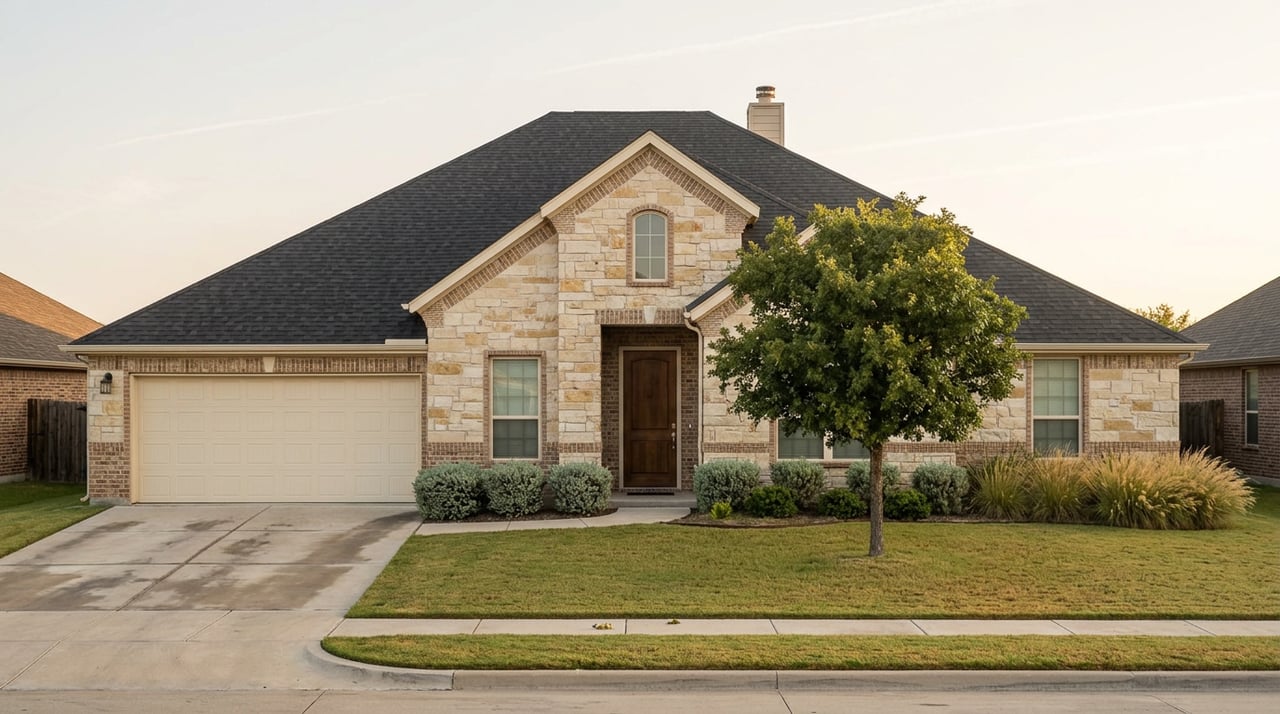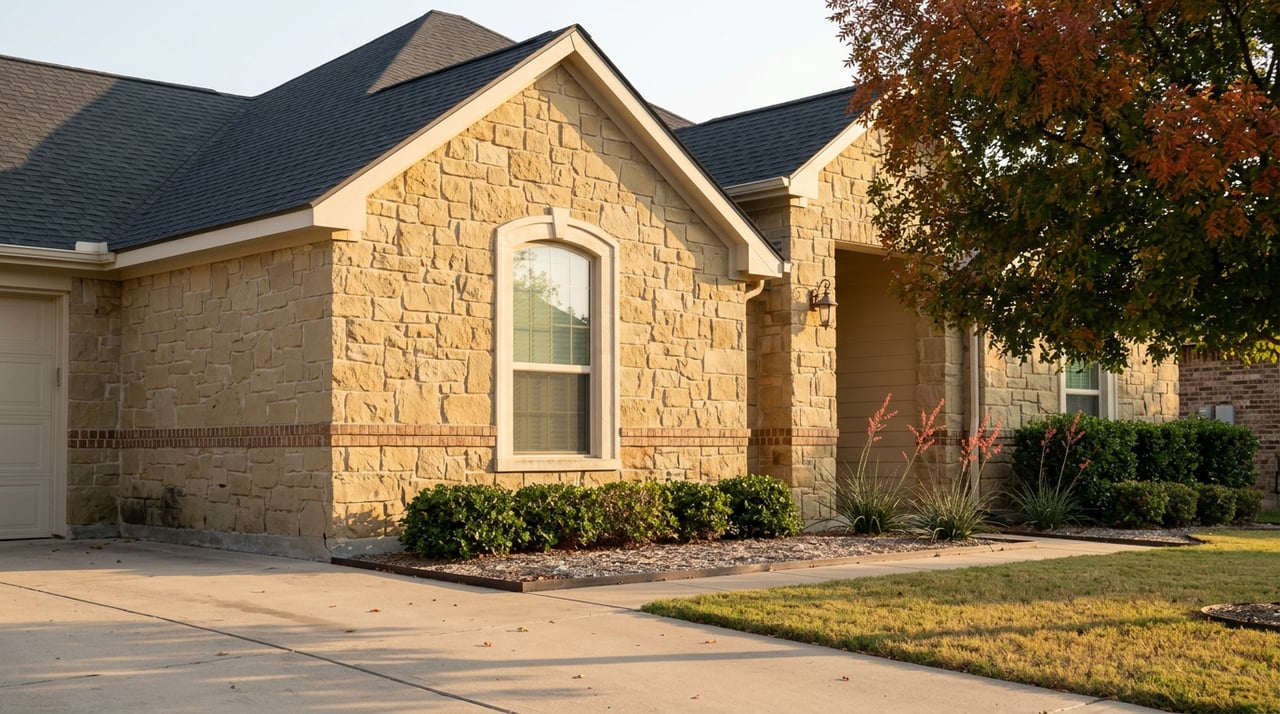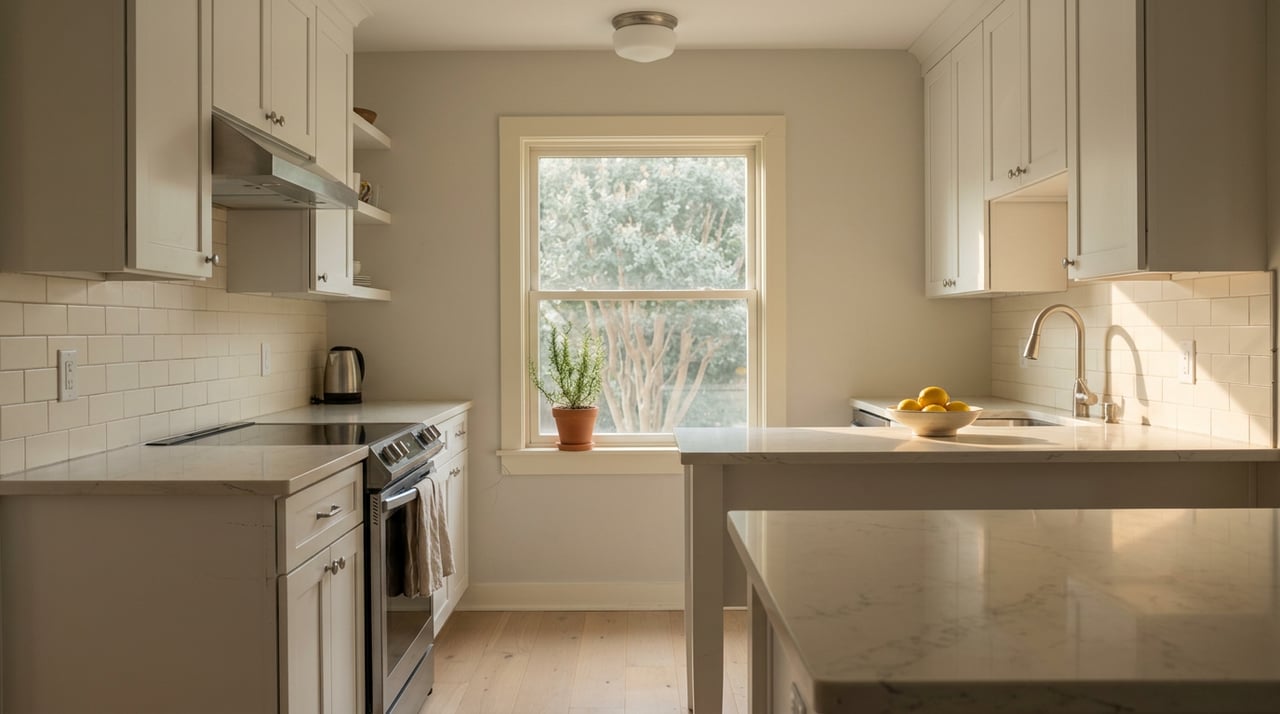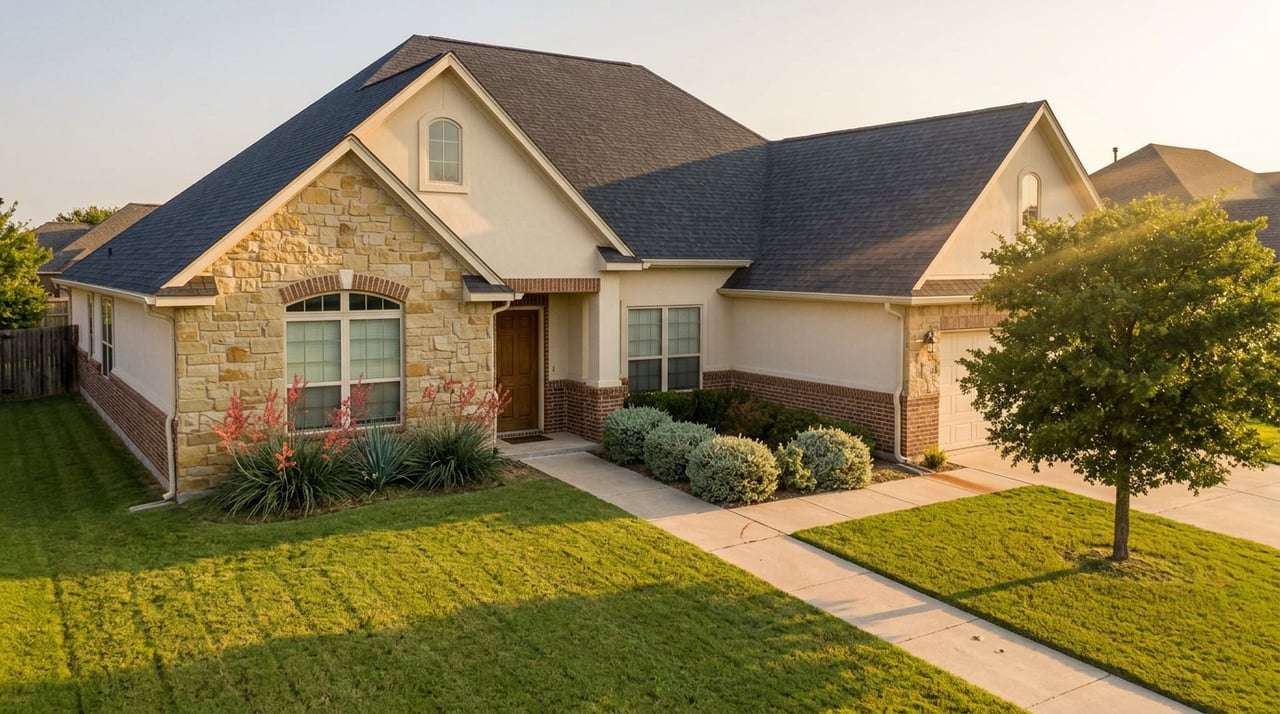
You can spend a Saturday morning touring homes south of 98th Street and come away thinking the math is simple. A three-bedroom resale in Fox Ridge lists at $197,000. A brand-new three-bedroom a short drive south in Bell Farms sells for $205,550. Same bedroom count, similar square footage, a few miles apart. It looks like a wash, maybe even a slight win for the new build, since you get fresh everything for eight grand more.
What doesn't show up on the sign, or in the listing photos, or in most agents' first pitch, is the assessment that rides along with the newer home for as long as you own it. It's not a scare story. It's a line item, and once you know where to look for it, it changes how you compare these two neighborhoods.
Two Homes, Nearly the Same Price, Different Bills
Fox Ridge sits south of 98th Street between University Avenue and Avenue U, built out mostly since the early 2000s. It's a settled neighborhood now: rear service alleys, established foundation plantings, floorplans that run 1,200 to 2,600 square feet. Current resale listings in the neighborhood cluster in the low $190,000s to just over $200,000 for the smaller three-bedroom, two-bath layouts, with larger homes reaching into the $300s.
Bell Farms, a short drive further south and built by Betenbough Homes, is marketed as one of the fastest-growing new-construction communities in the area. Homes there run 1,000 to 2,700 square feet, and recent sales have closed in a strikingly similar range to Fox Ridge resales: $205,550 in March 2026 for a 1,109-square-foot three-bedroom, $210,000 in January 2026 for a 1,350-square-foot three-bedroom, $243,275 in January 2026 for a nearly identical floorplan just a few lots over.
Look at those numbers side by side and the entry point for new construction in Bell Farms isn't dramatically higher than resale in Fox Ridge. That's the part worth sitting with, because it runs against the assumption most buyers walk in with: that new always costs meaningfully more than established. Here, at the entry tier, it barely does.
The difference shows up somewhere else. Bell Farms is organized as a Public Improvement District, a formal designation the City of Lubbock uses to fund and maintain the neighborhood's shared spaces. Every home inside the PID carries an annual assessment of $0.12 per $100 of appraised value, collected through the Lubbock Central Appraisal District and passed through to the city to maintain the community's parks and trails. Fox Ridge, as an older, already-built neighborhood, doesn't carry that assessment on its resale homes.
Run the math on a home valued near $220,000, which is close to where several recent Bell Farms sales have landed, and the PID assessment pencils out to roughly $264 a year, about $22 a month. That's not a number that kills a deal. It's a number that quietly erases part of the price gap you thought you were getting, and it's the kind of detail that's easy to miss until it shows up on a loan estimate or a tax statement well after you've fallen for the floor plan.
What the PID Actually Buys
The assessment isn't just a fee for the sake of a fee. The Bell Farms PID funds the neighborhood's shared green space: five planned parks, two of them built around the site's playa lakes, roughly two and a half miles of walking trails once construction wraps, and smaller pocket parks tucked between blocks. An advisory board of five residents, serving three-year terms, meets four to six times a year to direct how that money gets spent and to weigh in on maintenance priorities. It's a structure, not a hidden tax. But it is a recurring cost that a Fox Ridge resale buyer simply doesn't have on their side of the ledger, because Fox Ridge's parks and streets were built and paid for years ago, before the neighborhood matured into what it is today.
That's the trade you're actually making when you pick between these two streets. Fox Ridge sells you a finished neighborhood with no ongoing assessment attached to its infrastructure. Bell Farms sells you brand-new construction and a still-growing amenity package, funded in part by a bill you'll see every year you own the home.
If You Want More House, the Math Changes Again
There's a third option in the same general area worth naming, because it answers a different question. Kelsey Park, further south along Quaker Avenue, is where buyers go when the goal isn't an entry-level home but a significant step up in size. Homes there typically run 2,000 to 4,000 square feet, with prices starting in the $400s and climbing past $1 million for the larger, more custom builds. It's a genuinely different price tier, and current market commentary on South Lubbock still points to Kelsey Park as one of the area's steadier sellers, popular with young families and professionals who want a larger footprint from day one. The neighborhood's 80-acre community park, complete with a private pond and paved trails, is part of what buyers are paying that premium for.
Kelsey Park isn't really in competition with Fox Ridge or Bell Farms at the entry level. It's the answer for someone whose budget was never going to land in the low $200s to begin with. But it's worth knowing it sits in the same general footprint, because it shows how wide the price range actually gets across a few square miles south of 98th Street, all zoned to Lubbock-Cooper ISD.
| Neighborhood | Typical size | Typical price band | Ongoing assessment |
|---|---|---|---|
| Fox Ridge | 1,200–2,600 sq ft | Low $190,000s to $300s | None on resale homes |
| Bell Farms | 1,000–2,700 sq ft | Roughly $205,000–$243,000 (recent sales) | PID assessment, $0.12 per $100 valuation |
| Kelsey Park | 2,000–4,000+ sq ft | $400s to over $1 million | Not covered in this comparison |
What to Actually Check Before You Compare Two Listings
The lesson here isn't that new construction is a bad deal or that Bell Farms is overpriced. It's that a listing price alone doesn't tell you what a home actually costs to hold onto. Before you compare two homes that look similarly priced, ask the same three questions every time:
- Is this property inside a Public Improvement District, a Municipal Utility District, or any similar special assessment area, and what's the current rate?
- Is that assessment collected through the county appraisal district alongside property taxes, or billed separately?
- Does the assessment fund something that already exists, like Fox Ridge's mature parks, or something still being built out, like Bell Farms' trail network?
None of these questions will show up on a listing sheet. They show up on the loan estimate, the closing disclosure, or a direct call to the title company, and by the time most buyers see them, they've already fallen for the house.
FAQs
Does every new-construction community in South Lubbock have a PID assessment? No. It depends on how the developer and the city structured the neighborhood. Bell Farms is a documented Public Improvement District with a set rate. Not every subdivision south of 98th Street is organized the same way, so this has to be checked property by property rather than assumed based on the neighborhood's age.
How do I find out if a specific home carries a PID assessment before I write an offer? Ask your agent to pull the property's tax history through the Lubbock Central Appraisal District, which will show any special assessments alongside standard property taxes. For homes inside a known PID like Bell Farms, the city maintains public information on the assessment rate and how it's used.
Does a PID assessment ever go away? It depends on the district's terms and how the city and advisory board structure it over time. It's not something to assume will disappear on a set schedule, which is another reason to treat it as a real, ongoing cost rather than a temporary line item.
If you're weighing a resale in an established neighborhood against new construction a few minutes away, the sticker price is only half the comparison. The other half is buried in paperwork most buyers don't ask for until it's too late to negotiate around it. Real Estate by Anna spends as much time reading closing disclosures and appraisal district records as we do touring floor plans, because the real cost of a home in South Lubbock is rarely just the number on the sign. If you're comparing Fox Ridge to what's being built around it, schedule a free consultation and we'll walk the numbers with you before you write an offer.